Roulette wheels compared: single-zero, double-zero and triple-zero
European single-zero, American double-zero and the newer triple-zero wheels compared: house edges of 2.70%, 5.26% and 7.69%, and how to tell them apart.
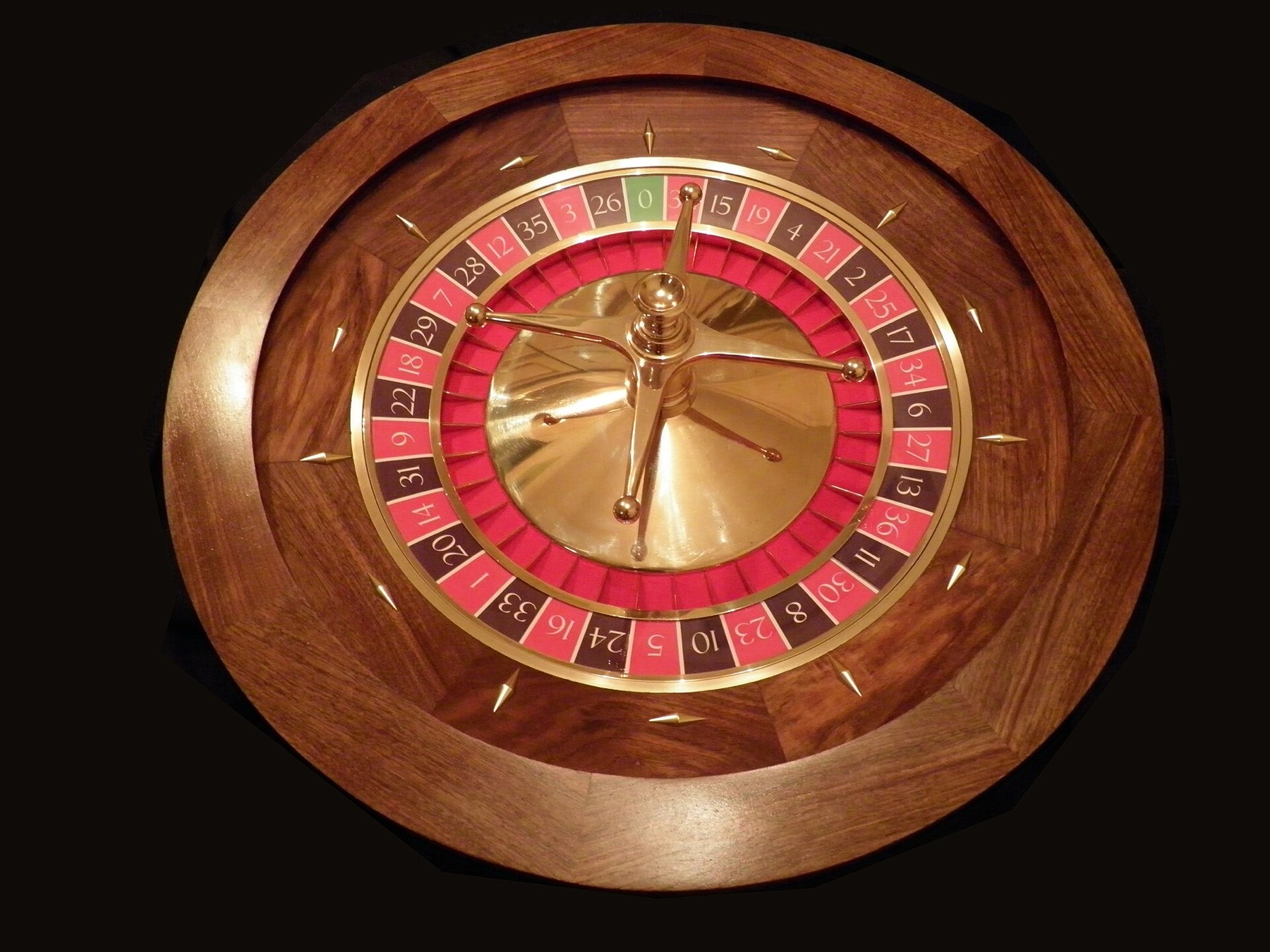
Roulette looks the same at every casino: a spinning wheel, a small white ball and a felt layout of numbers. But the wheels are not all the same, and the difference that matters most is also the easiest to miss. The number of green zero pockets on the wheel decides how large a share of every bet the casino keeps over time.
This guide compares the three wheels you are likely to meet today, European single-zero, American double-zero and triple-zero, and shows how to identify each one before you sit down.
How roulette pays
On every roulette wheel, the payouts are set as if there were only 36 numbers. A straight-up bet on one number pays 35 to 1, a split on two numbers pays 17 to 1, a column or dozen pays 2 to 1, and red or black, odd or even and high or low pay even money.
The zeros are what create the house edge. They are extra pockets that are not red or black, not odd or even, and not included in the columns or dozens, yet they do not increase the payouts. The more zeros a wheel has, the larger the gap between the true odds and what the casino pays.
European single-zero: 2.70%
The European wheel has 37 pockets: the numbers 1 to 36 and a single green 0. A straight-up bet has a 1 in 37 chance of winning but pays as though it were 1 in 36. Over time the casino keeps 1/37 of the money wagered, a house edge of about 2.70 percent on every standard bet.
Some single-zero games, particularly in Europe and in some high-limit rooms, add a rule called la partage or en prison. If the ball lands on zero, even-money bets lose only half or are held for the next spin. That halves the edge on those bets to about 1.35 percent. In US casinos, single-zero tables are often found in high-limit areas with higher minimum bets.
American double-zero: 5.26%
The American wheel has 38 pockets: 1 to 36, 0 and 00. The payouts are unchanged, so the house edge rises to 2/38, about 5.26 percent, almost double the single-zero game. This is the standard wheel in most US casinos and is also used at some casinos elsewhere; Sun City in South Africa, for example, lists American roulette among its table games.
One bet on the double-zero layout is worse still: the five-number “top line” covering 0, 00, 1, 2 and 3 pays 6 to 1 and carries a house edge of about 7.89 percent.
Triple-zero: 7.69%
Triple-zero roulette adds a third green pocket, often marked 000 and sometimes shown as the casino’s logo, for 39 pockets in total. With payouts still based on 36 numbers, the house edge on every standard bet climbs to 3/39, about 7.69 percent.
Triple-zero wheels first appeared on the Las Vegas Strip in 2016 and spread quickly there; by recent counts they are found in dozens of Las Vegas casinos, often alongside double-zero tables and sometimes at lower minimums. The lower minimum can look attractive, but for most players the higher edge means a higher expected cost per hour than a double-zero table with a slightly higher minimum.
How to identify each wheel
Before you buy chips, take a few seconds to check which game you are looking at.
- Count the green pockets on the wheel: one means single-zero, two means double-zero, three means triple-zero. The third pocket may carry a logo instead of “000.”
- Look at the top of the betting layout, where the zeros sit above the numbers 1, 2 and 3. A single box is 0; two boxes are 0 and 00; three boxes, or a logo box alongside 0 and 00, indicate a triple-zero game.
- Check the number sequence. On a European wheel, the numbers next to 0 are 32 and 26. On an American wheel, 0 and 00 sit directly opposite each other.
- Read the table placard and the electronic display of recent results, which usually shows zeros and double or triple zeros.
- Ask the dealer. It is a normal question, and dealers answer it all the time.
What the difference means over an evening
House edge is a long-run average, so any single session can go either way. But over time it describes the expected cost of play. On $100 of total wagers, the expected loss is about $2.70 on a single-zero wheel, $5.26 on a double-zero wheel and $7.69 on a triple-zero wheel.
Roulette tables often deal somewhere in the region of 30 to 50 spins an hour, so a player betting $10 a spin may wager several hundred dollars an hour. At 40 spins, that is $400 in wagers, with an expected cost of roughly $11, $21 or $31 depending on the wheel. The wheel type makes a bigger difference to the cost of an evening than almost anything else about the game.
Why betting systems do not help
Roulette has attracted betting systems for centuries: doubling after a loss, following streaks, betting against recent results. None of them change the house edge, because each spin is independent and every bet on the layout (apart from the five-number bet) carries the same edge on a given wheel. Systems change the pattern of wins and losses and the size of the swings, not the long-run expectation.
If you choose to play, the only meaningful decisions are which wheel to play, how much to bet and when to stop. Set a budget in advance and treat any losses as the price of entertainment.
At a glance
| Wheel | Pockets | Green pockets | House edge | Expected loss per $100 wagered |
|---|---|---|---|---|
| European single-zero | 37 | 0 | 2.70% | $2.70 |
| Single-zero with la partage (even-money bets) | 37 | 0 | 1.35% | $1.35 |
| American double-zero | 38 | 0, 00 | 5.26% | $5.26 |
| Double-zero five-number bet | 38 | 0, 00 | 7.89% | $7.89 |
| Triple-zero | 39 | 0, 00, 000 | 7.69% | $7.69 |
Figures are long-run mathematical averages. Individual sessions vary widely.
Key takeaways
- Single-zero: 2.70%. Double-zero: 5.26%. Triple-zero: 7.69%.
- Count the green pockets before you play.
- A lower table minimum on a triple-zero wheel can still cost more per hour.
- No betting system changes the house edge.
Related guides

Tribal casinos in the United States, explained
How the Indian Gaming Regulatory Act works, what class II and class III gaming mean, why tribal-state compacts matter and what changes for you as a visitor.
Keno explained: the draw, the pay tables and the house edge
How a keno draw works, what spots and catches mean, why pay tables matter and why keno’s house edge is among the highest in any casino.
Gambling is entertainment, never income.
Every casino game has a built-in house edge. Set a budget and a time limit before you play, never chase losses, and stop if it stops being fun. Minimum ages depend on the jurisdiction.
- National Problem Gambling Helpline (US)1-800-GAMBLER
- National Council on Problem Gambling (US)ncpgambling.org
- Connecticut Council on Problem Gambling1-888-789-7777
- New York HOPEline1-877-8-HOPENY (1-877-846-7369)
- South Africa National Responsible Gambling Programme0800 006 008